
The October surprise is a dastardly conspiracy between Big Candy and Big Data
Mrs. Grundy Thinks there is scandal afoot this October and it doesn’t involve a single election ballot. The real scandal is Big Candy’s suppression of Big Data about Halloween candy consumption.
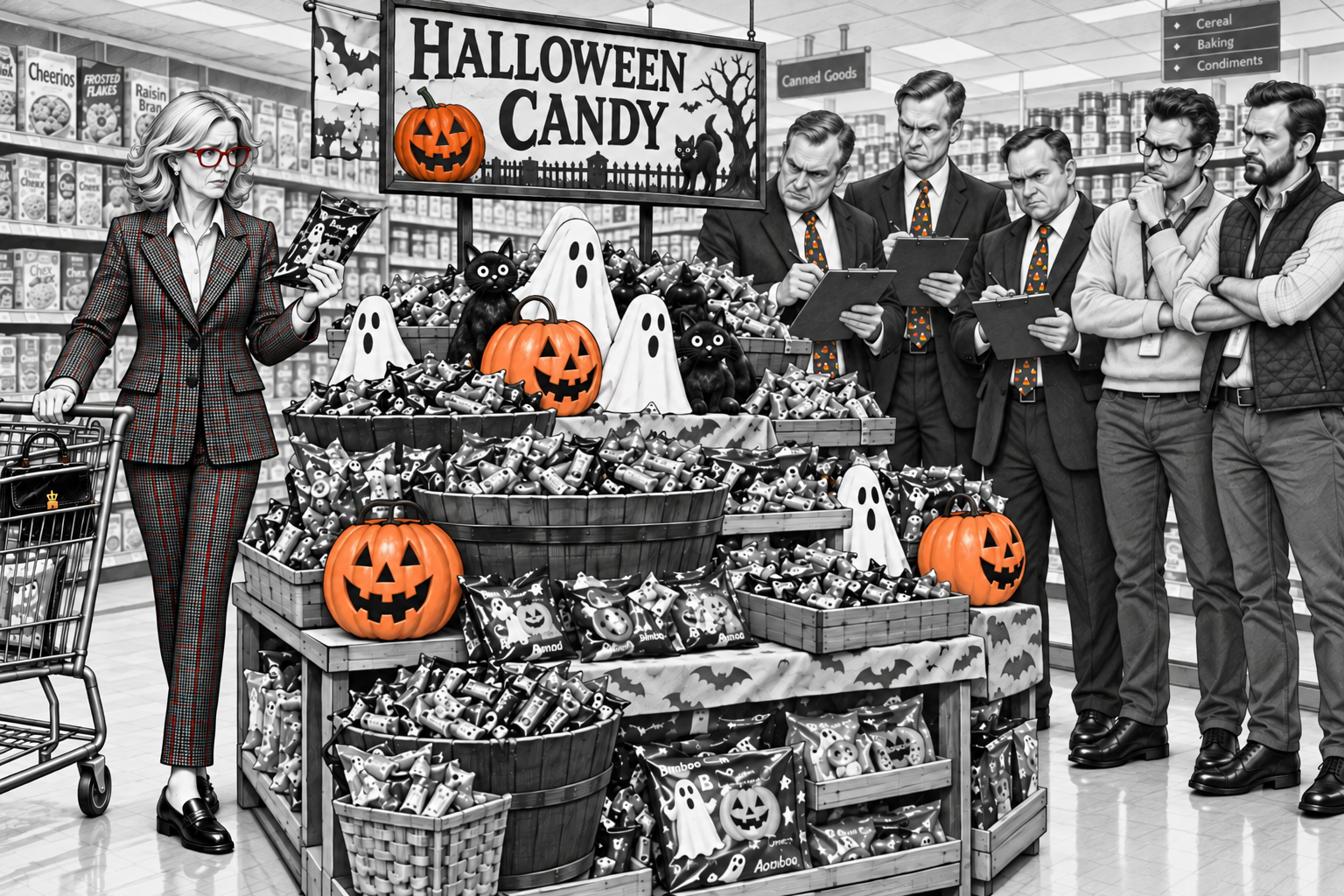
To wit, despite thousands of data centers and pervasive artificial intelligence, American consumers are denied the Halloween information they need most: Reliable estimates of candy demand.
Surely, it is possible for Big Data to correlate households with children in a given neighborhood and then estimate, within a margin of error, the number of trick-or-treaters to expect at each address. Thusly, providing the precise amount of Halloween candy necessary to meet demand per doorbell.
For what savvy shopper has not stood at a candy display, shocked by high prices, and wondered how much to buy. Should they stock up, in case war blocks candy supplies in the Strait of Hershey? What if a SpaceX rocket fails to bring further supplies from Mars, Inc.? What if they buy candy today, and it goes on sale tomorrow?
As a general rule, Mrs. Grundy buys large quantities in advance, as a few years ago she ran out of candy and gave canned tuna instead. Her neighbors still talk about this most embarrassing incident.

Yet, stocking up early is dangerous for those like Mrs. Grundy who have a notorious sweet tooth. Halloween candy seems to call “eat me” from the food pantry. Hence, she eats the treats and must re-supply after Columbus Day (or whatever that holiday is now called).
Mrs. Grundy has it on authority that Big Candy suppresses per-address demand data to ensure consumers continue to over-buy. If this Big Lie were revealed, Big Candy Halloween sales would surely plummet.
Shouldn’t at least one of the many U.S. Federal Reserve Banks study the Imperfect Halloween Candy Market and demand reform?
Yet, Mrs. Grundy knows reform will be elusive so long as Big Candy suppresses Big Data. Big Oil, Big Pharma and Big Tech are positively philanthropic compared to these sugar-fueled, data-denying giants. Indeed.